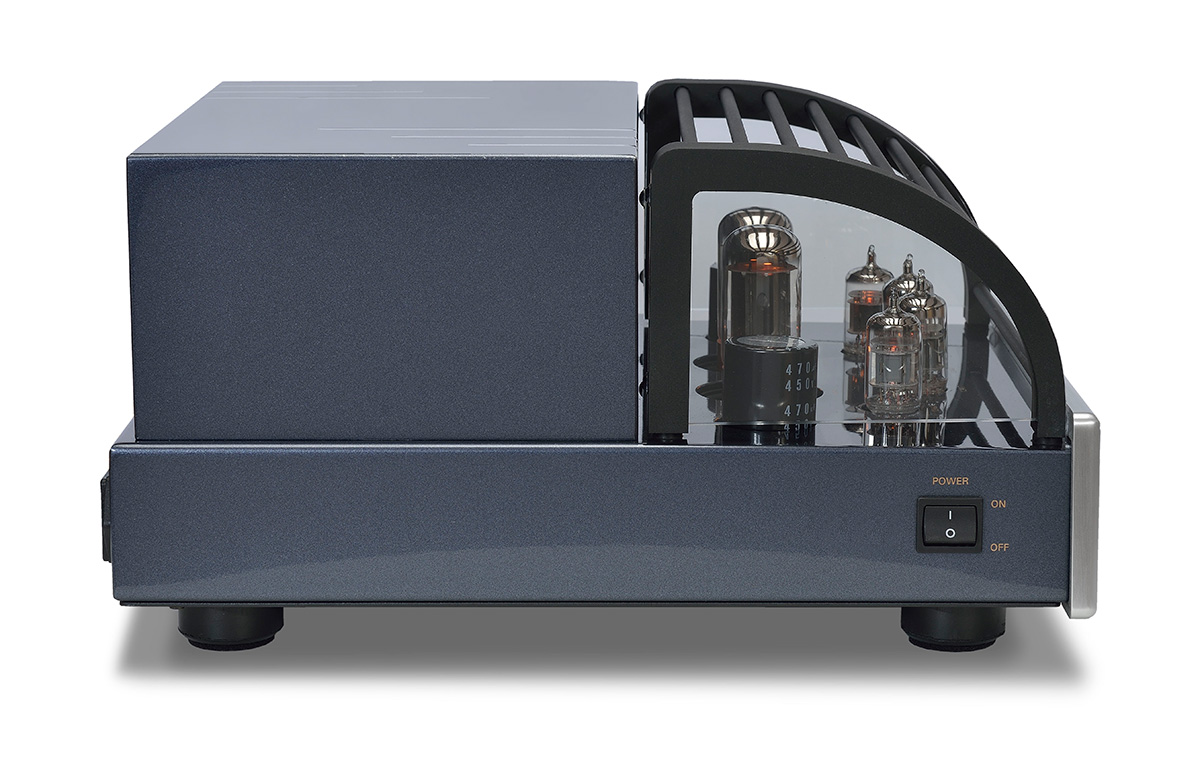
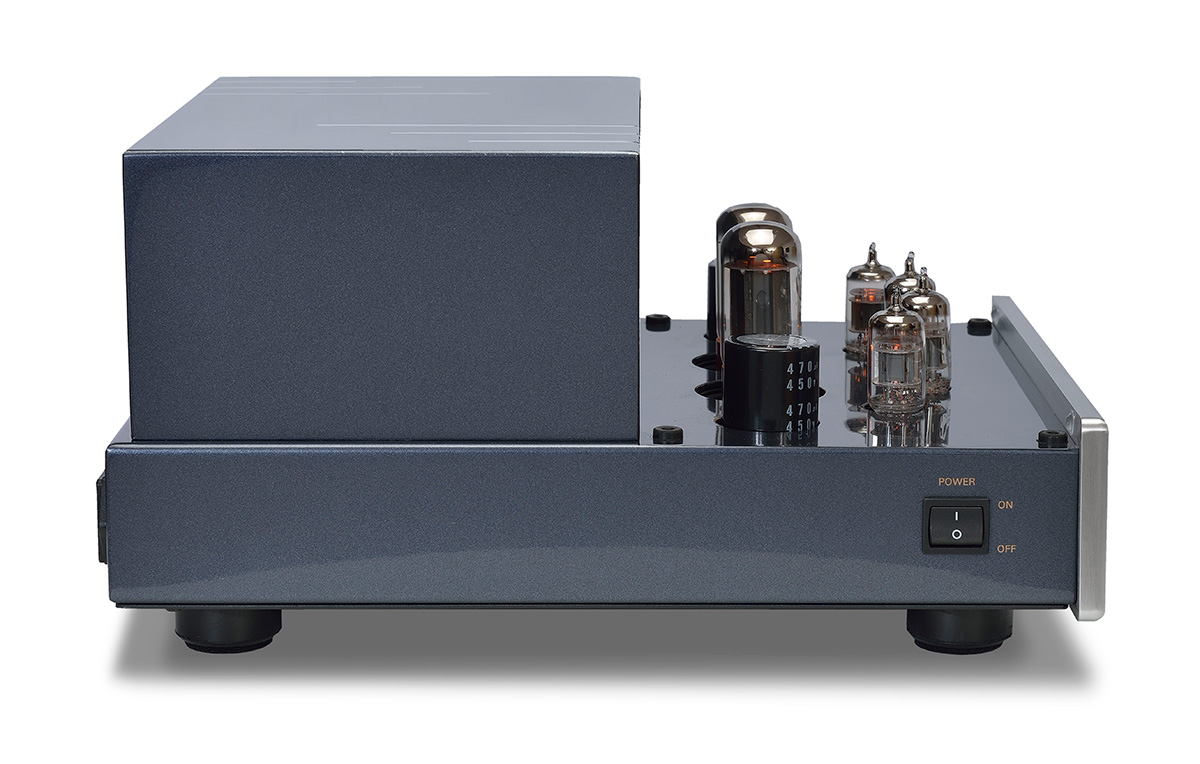
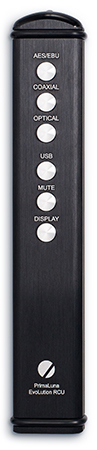
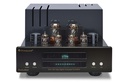
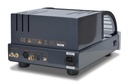


PrimaLuna EVO 100-d D/A Converter DAC
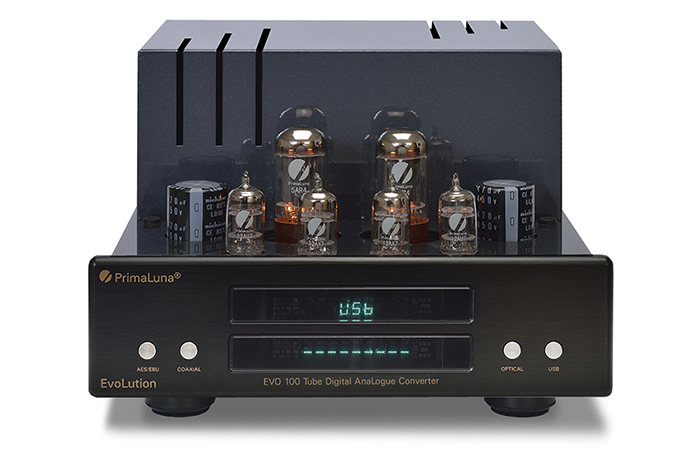
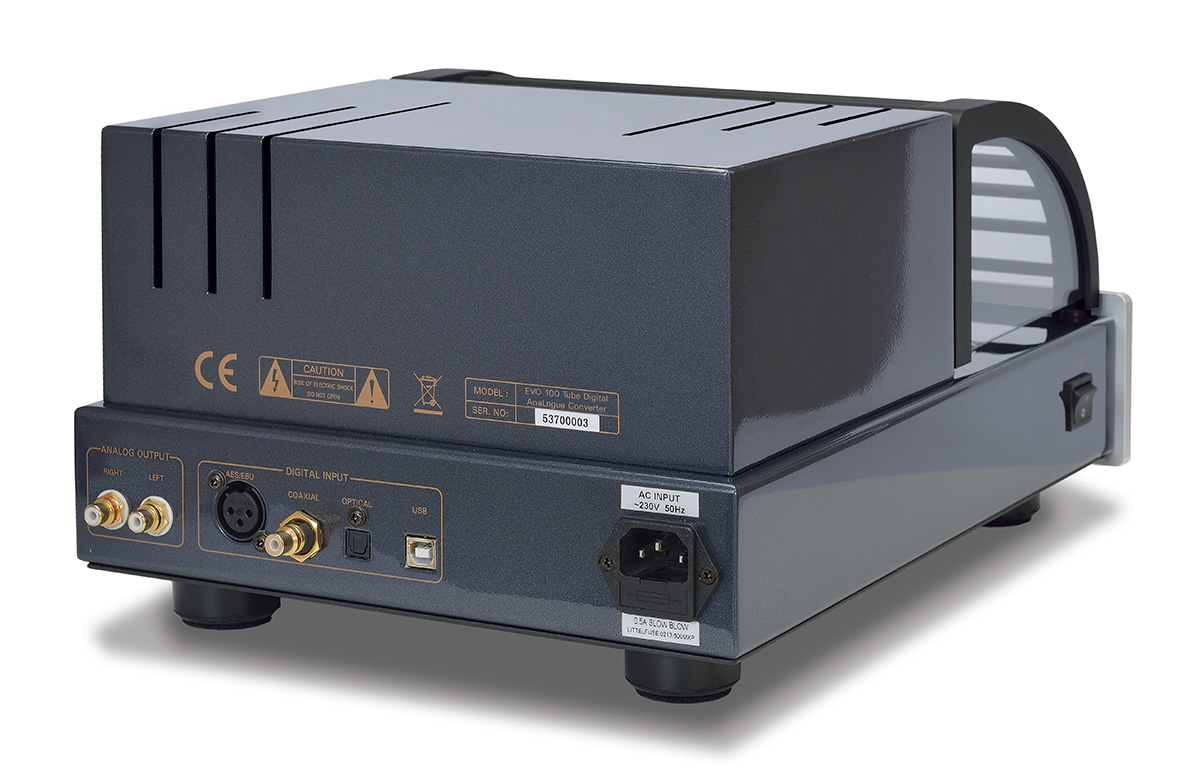
The PrimaLuna EVO 100 DAC is a tube DAC with USB, AES/EBU, coaxial and optical inputs, a Burr-Brown PCM1792A DAC and SRC4192 upsampling to 24 bit/192 kHz; via USB it also handles DSD64 and DSD128 (DoP). The SuperTubeClock replaces the solid-state oscillator with a mini triode tube to reduce jitter, and the AC Offset Killer keeps transformer noise low.
About the PrimaLuna EVO 100-d D/A
AC Offset Killer is all about goosebumps. The ones you get when music comes out of a background so quiet you might say to yourself: "How is this possible?" PrimaLuna winds our own massive toroidal transformers to order, low in hum and EMI. But we wanted more. Our engineers designed the AC Offset Killer to lower transformer noise to a place no other manufacturer dreams of, no matter how bad your electricity is. The result? A sense of space. Texture. The resonance of an acoustic guitar or violin string that seems to linger forever. The AC Offset Killer will amaze you.
First-class parts, including polypropylene capacitors, triple pi power supply filters and custom-designed isolation transformers that separate the analogue and digital devices, resulting in reduced signal degradation and improved sonics from top to bottom. Many DACs weigh ten pounds or less. The EVO 100 Tube DAC weighs almost 13 kilos!
You spend a lot of money on interconnects. So why should the signal go straight from the RCA connectors or speaker terminals to circuit boards with copper traces so thin you can barely see them? What is high-end about that? PrimaLuna uses point-to-point wiring on all products. The entire signal path, including resistors and capacitors, is carefully hand-wired by a craftsman.
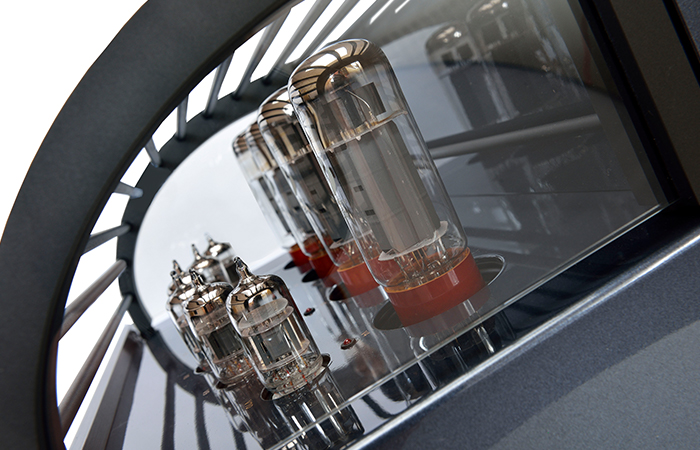
Dedicated tubes per channel
While it is fine to use a single tube as a buffer for both channels and claim your DAC is "tube", it cannot be compared with the PrimaLuna design and what it does for the music.
The vacuum-tube-rectified power supply contains eleven separate power supply regulation circuits. Tube rectification is synonymous with organic sound, especially compared with DACs known for sounding like "a computer".
The digital USB input lets you use your computer for storing and playing your music, with all the benefits of features such as playlists and easier access to your whole music library. Instead of just adding a USB input as an afterthought, PrimaLuna's engineers searched endlessly for the best-sounding USB interface we could find. Our USB input converts the jitter-filled digital USB signal to S/PDIF, drastically improving the quality of the digital signal before it reaches the SuperTubeClock. This USB input is a true high-resolution digital input.
Features
USB digital input
Dual toroidal transformers
Premium output transformers
SuperTubeClock
Dual-mono topology
AC Offset Killer
Vacuum tube rectified
Point-to-point wiring
Premium parts
Remote control
24bit/192kHz Upsampling: Burr Brown SRC4192
Premium DAC: Burr Brown PCM1792A
Our digital difference: the SuperTubeClock™
This is where the magic happens... the SuperTubeClock™ replaces the semiconductor oscillator normally found in a DAC with a mini triode vacuum tube. By using a tube, we have considerably reduced the amount of jitter and noise, resulting in superior retrieval of detail. This in turn yields superior detail and dynamics from top to bottom, and improved overall musicality. First, a note about the tube itself: the tube is a very robust, long-life Russian military triode, specially designed for oscillation purposes... which is its function here. It runs very conservatively, so life expectancy is about 5 to 10 years of operating time. The small glass envelope guarantees very low microphony.
Triode tubes are by nature low-noise devices and extremely linear when used correctly. This means the oscillation frequency wave they produce is very pure and clean. The noise in the sidebands, from 10 Hz to 100 kHz either side of the oscillation frequency, is extremely low. This is the important spectrum for audio. Anything below and beyond it can be ignored. When you reclock the inputs, any noise generated here appears unfiltered and unattenuated at the input of the conversion chip and injects jitter, which from that moment on is an indistinguishable part of the digital audio stream. No amount of cleaning will ever remove this noise once it has reached this point; it has become part of the audio signal. This noise "rides" on the audio signal, so you do not hear it as noise, but as smearing of notes and masking of detail. There is a characteristic loss of dynamics, tonal purity, inter-transient silence and sense of timing. We call this 'noise modulation'. That is why low noise, especially in the 10Hz-100kHz sidebands of the oscillator, is so crucial. Again: below and beyond these frequency extremes is trivial, because it will not affect the audio and will not reach the analogue outputs. When the clock is used to clock the DAC chip, a similar situation arises as described above: the noise appears at the point where the digital audio stream is converted into successive steps in a staircase wave representing the analogue audio signal. Each step must be EXACTLY 1/441000th, 1/96000th, 1/176400th or 1/192000th. The injected noise introduces a deviation in time that is the exact replica of that noise. This means the audio signal at the outputs of the DAC chip carries the noise, again as an inherent part of the signal. No amount of filtering will remove the noise once it has reached this step. Again we experience that smearing and masking of detail, with that characteristic loss of dynamics, tonal purity, inter-transient silence and sense of timing. Here you can see how much sense it makes to reclock BOTH the inputs AND the DAC chip. The oscillation frequency wave a tube produces is a sine wave. That is no good: it has to be converted into a square wave. This is a very delicate procedure: when the rising and falling edges of a square wave are not steep enough, there is a certain window in which the actual transition of the data bit is not precisely defined in time. It leaves room to be too late or too early. This is partly a random process and partly dependent on ambient conditions, such as variations in supply voltage, ground noise, inherent CMOS or chip crosstalk in the decoder or DAC chip, etc. All these timing variations are noise and are called jitter by various sources. The steeper the edges, the more precise the moment of transition will be, resulting in less noise (jitter). When a clock produces a very stable frequency with such low jitter, there will be a more accurate reproduction of the music's original analogue waveform. Here are a few real SuperTubeClock™ photos of what it can do: experts will certainly enjoy them. No other commercial clock on earth will produce a square wave like this. Every square wave shown below is measured on a Philips PM3295A analogue 400MHz oscilloscope with LeCroy 10:1 probes. These probes attenuate the signal by a factor of 10 so as not to burden the device under test with a load, resistive or capacitive. So the vertical resolution on the scope image must be multiplied by 10. If you see ~0.1V, for example, it is actually measuring ~1V(AC). The SuperTubeClock™ generates a square wave of 8.4672 mHz. The vertical slope is measured at ~500mV (each black horizontal line represents 500mV, counted from top to bottom). The vertical peak-to-peak movement of the square wave at this frequency is 3.5 volts, which is excellent. Each black vertical line going from left to right represents 10 nanoseconds. The faster a clock can go from peak to peak, the better. Square waves present themselves more and more like sine waves the higher you go in frequency. So an 8.4672 mHz wave like the one above is still recognisable as a square wave, but as we approach 42.2 mHz, a square wave will usually be almost full.
PrimaLuna EVO 100-d D/A specifications
- Inputs
- USB
- AES/EBU
- coax
- Optical
- Output stereo RCA
- PCM (all inputs)
- 16bit-24bit
- 44.1 kHz - 192 kHz
- DSD (USB) DSD64-DSD128 (DoP)
- DSD (other inputs) DSD64 (DoP)
- DAC TI (Burr Brown) PCM1792A
- 24bit/192kHz upsampling TI (Burr Brown) SRC4192
- Tubes used
- 2 - 12AX7
- 2 - 12AU7
- 2 - 5AR4
- Dimensions 28cm x 19cm x 40.3cm
- Weight 13kg
Advice or a listening session
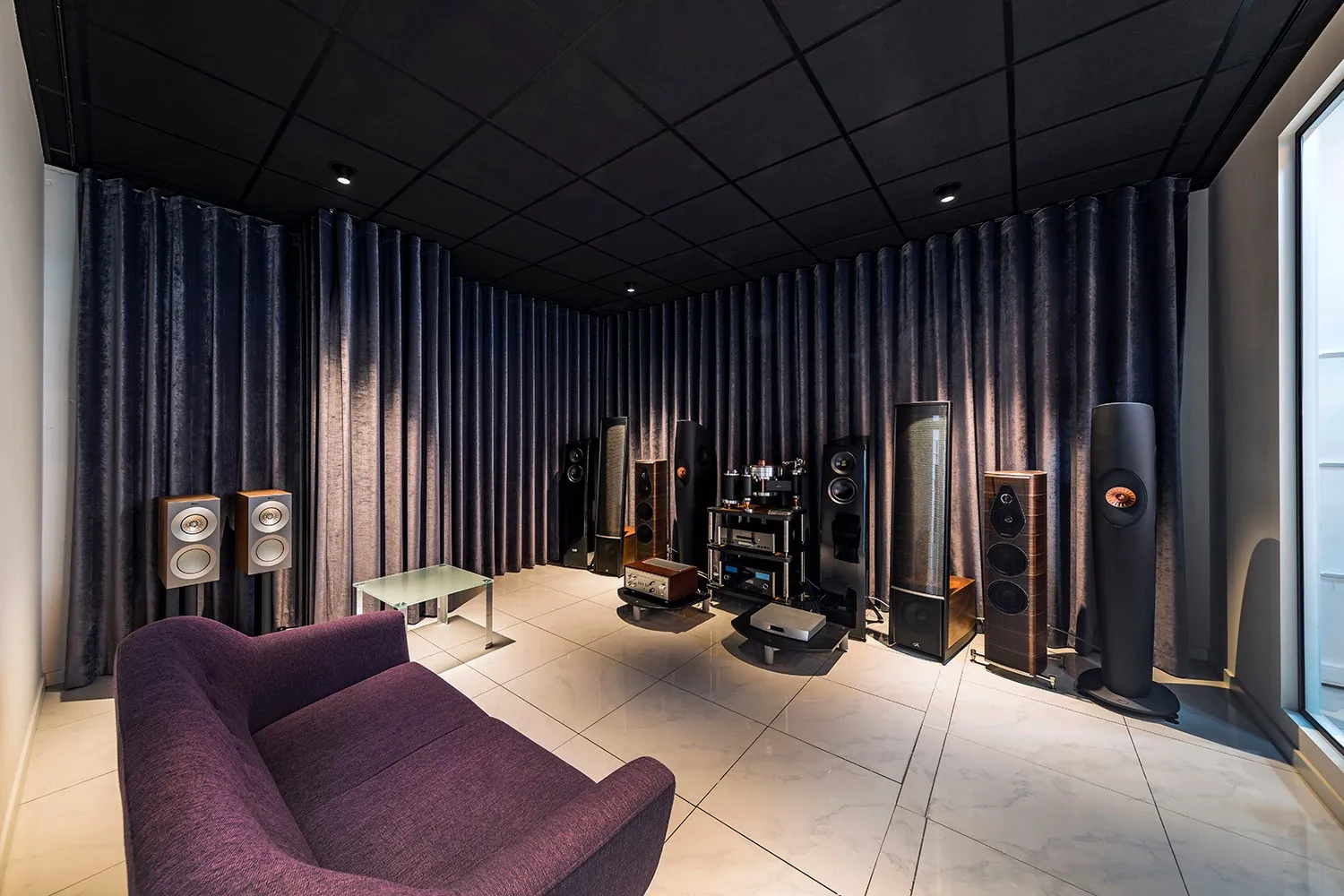
Would you like to hear this first? In our two listening rooms on Hoenderstraat in Maastricht, each with its own acoustics, we will set up the system for you. Make an appointment or call 043-7370028 — we are happy to help you find the right choice and the right placement.
Warranty
We guarantee that this product complies with the agreement, the specifications in the offer and the statutory provisions. Many brands also give their own warranty on their equipment. An additional warranty never limits your statutory rights: you can always rely on the law. Something wrong with your purchase? Contact us. Read more about warranty
-
Brand
-
Colour
- Official dealer of PrimaLuna
- 4.5 from 48 reviews on Google
- Free shipping from € 35 in the Netherlands, Belgium, Germany and Luxembourg
- Listen in our shop in Maastricht — also by appointment outside opening hours
- Questions? Call +31 43 737 0028